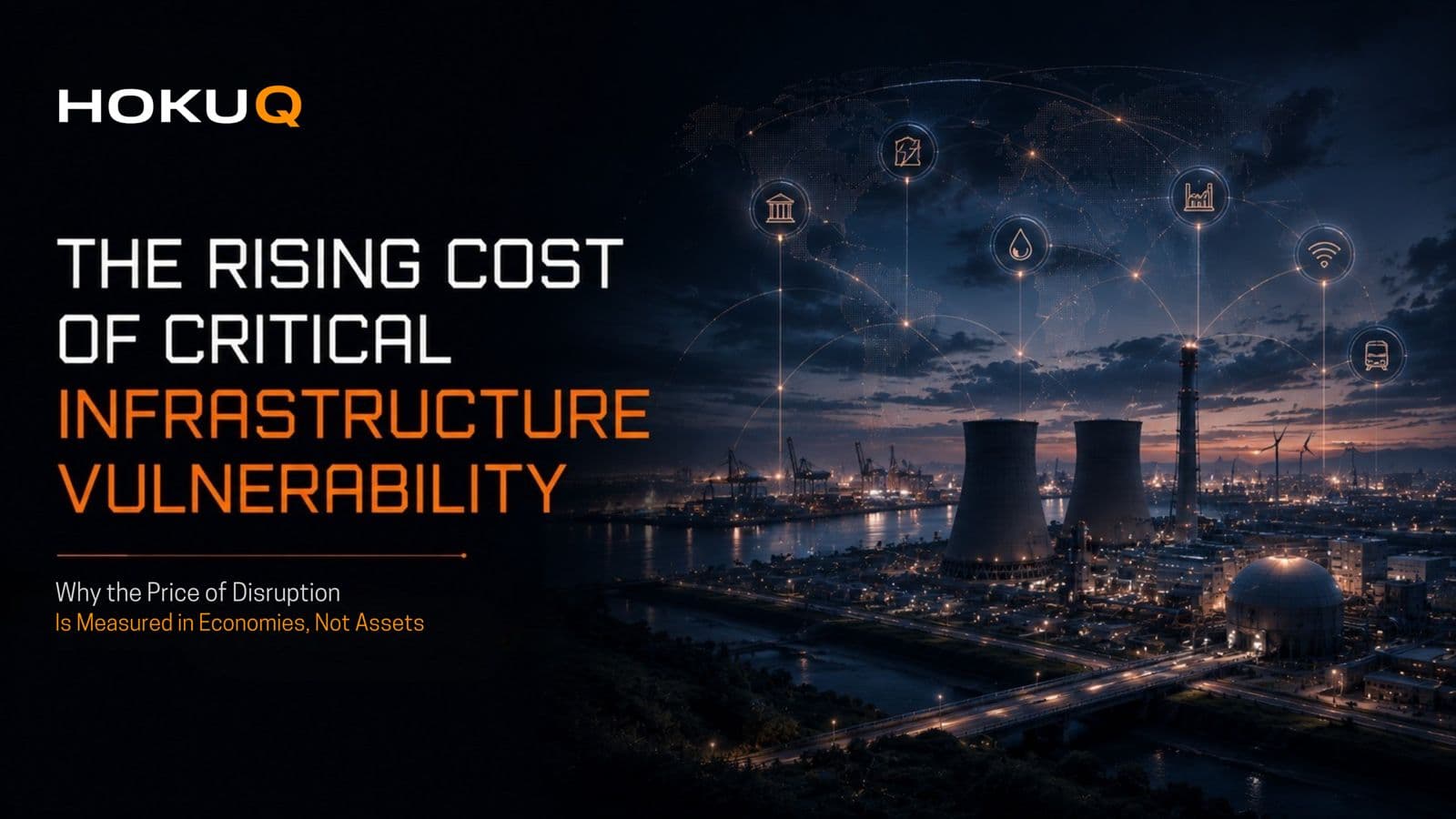
Why the Price of Disruption Is Measured in Economies, Not Assets
For most of modern history, critical infrastructure was protected by geography.
Power stations sat behind fences. Ports were guarded by water. Airports were secured at street level, because street level was where threats arrived.
That protection has quietly disappeared.
Inexpensive autonomous systems can now reach what distance, walls, and guards were built to protect. The perimeter has not been breached. It has been made irrelevant.
Disruption Does Not Require Destruction
An attacker does not need to destroy an airport to defeat it.
A single unidentified drone can close runways for hours. A brief intrusion over a refinery can halt operations for days. The weapon does not have to strike anything. It only has to be seen.
This is the uncomfortable truth of the new threat environment: the cost of causing disruption has collapsed, while the cost of absorbing it keeps rising.
The Cost Cascades
Critical infrastructure does not fail alone.
Power failures interrupt water treatment, telecommunications, hospitals, and financial systems. A closed port delays goods across an entire continent. A grounded airport strands more than passengers, it strands commerce.
The true cost of an incident is never contained within the asset that was attacked. It flows outward, through every system that depended on it.
Vulnerability Is Now a Strategic Question
For decades, infrastructure protection was an operational concern, delegated and budgeted like maintenance.
It no longer belongs there. When a low-cost aerial system can produce national consequences, exposure becomes a matter for cabinets and boards, not just control rooms.
The essential question for every government and operator is no longer whether they own security equipment. It is whether they understand their exposure before someone else demonstrates it.
The HokuQ Perspective
At HokuQ, we believe protecting critical infrastructure is the defining security challenge of the autonomous era, because it is where national security and daily life meet.
Resilience begins with understanding: knowing what is approaching, what it intends, and what depends on the asset it is approaching.
The rising cost of vulnerability will never appear on an invoice. It appears afterward, in everything that stopped. And the most exposed infrastructure of all is the infrastructure no one can see.