Why Tomorrow's Security Will Be Defined by Intelligence, Not Interception
For decades, national defense has been built on a simple principle: detect a threat, intercept it, eliminate it.
That model is now being challenged.
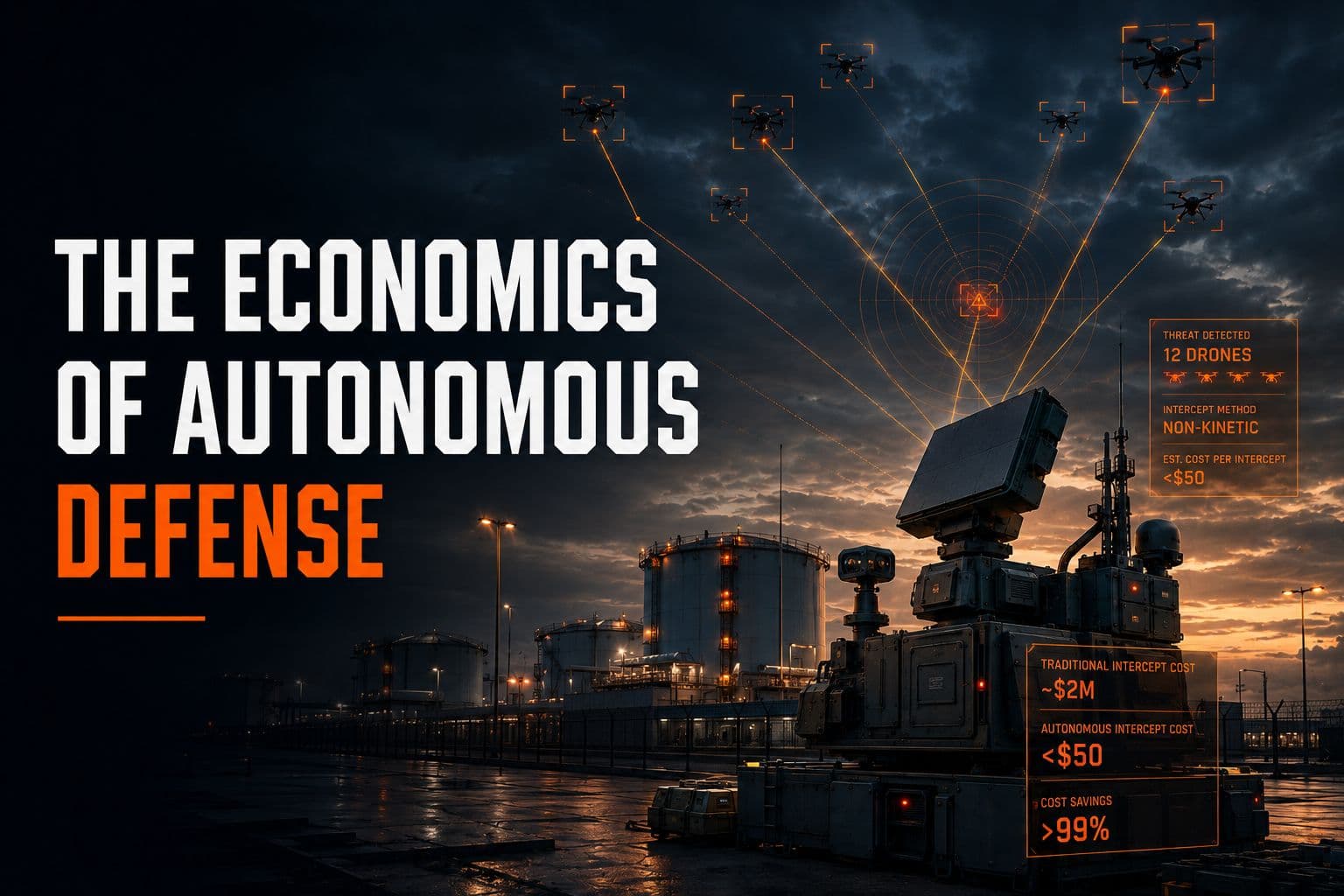
The rapid emergence of autonomous drones has fundamentally altered the economics of security. Capabilities that were once reserved for nation states are becoming increasingly accessible, enabling sophisticated aerial threats at a fraction of the historical cost.
This is more than a technology shift. It is an economic shift.
When an inexpensive autonomous drone can force the deployment of highly sophisticated defensive assets, the balance between cost and protection begins to favor the attacker. Organizations are no longer measured solely by their ability to respond. They are measured by their ability to respond efficiently, intelligently, and at scale.
The challenge extends well beyond military environments. Critical infrastructure operators, airports, ports, energy providers, telecommunications networks, transportation hubs, and public venues all face a growing need to protect increasingly complex environments from evolving aerial threats.
Traditional approaches remain important, but they were largely designed for isolated events. The future will demand systems capable of understanding intent, identifying coordinated behavior, prioritizing threats, and supporting decisions in real time.
In other words, the next generation of defense will be driven by intelligence.
The Economics Have Changed
Can this solution scale against multiple simultaneous threats?
Can operators make faster and more informed decisions?
How can organizations reduce operational costs while increasing resilience?
How can governments protect more infrastructure with finite resources?
These are no longer purely technical questions. They are strategic investment decisions.
A New Approach to Autonomous Defense
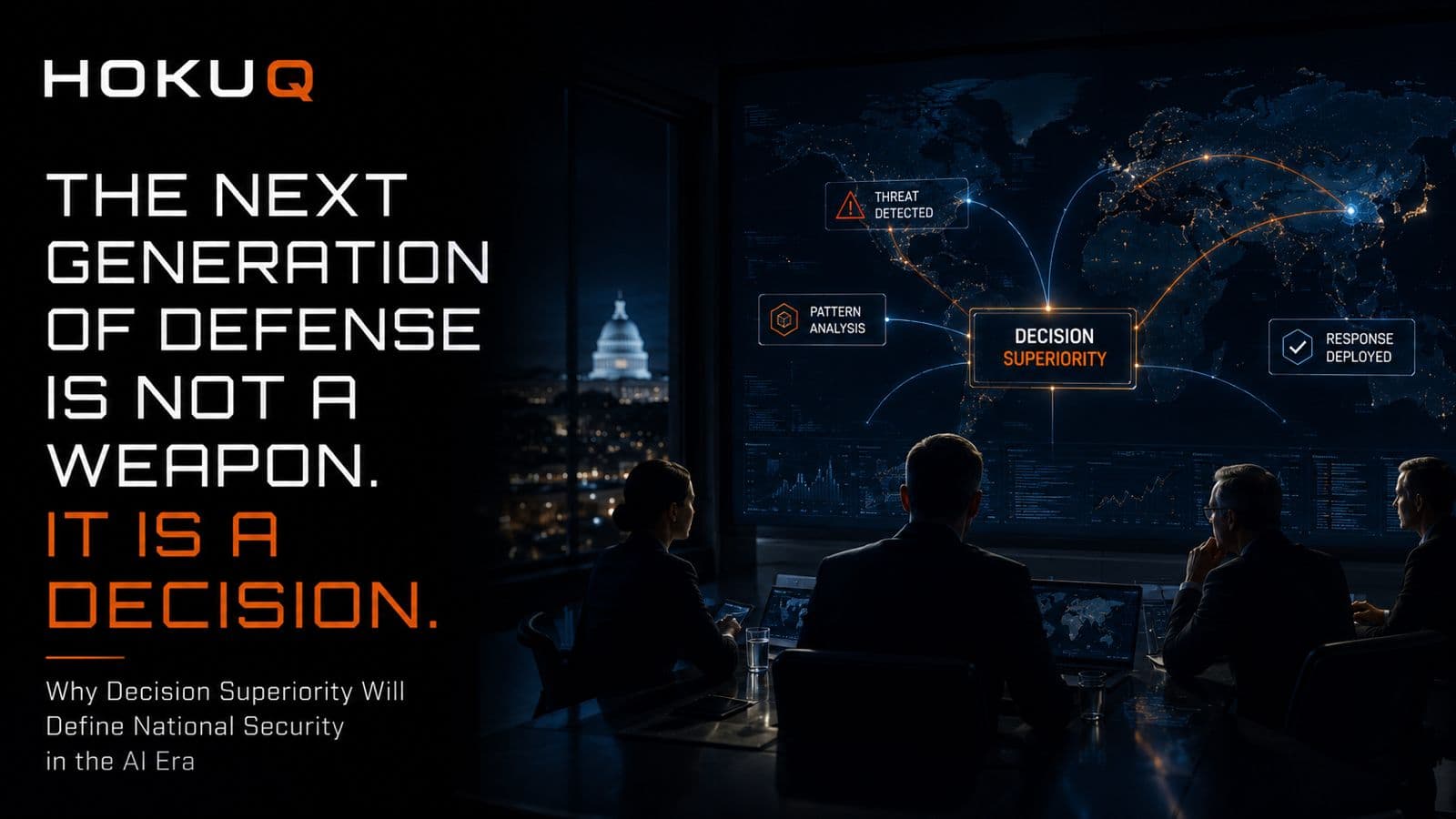
Effective defense increasingly depends on combining information from multiple sources, identifying patterns, prioritizing threats, and delivering actionable intelligence before a situation escalates. Artificial intelligence is becoming a force multiplier that enables faster, better informed operational decisions.
Why This Matters
Governments, defense organizations, and critical infrastructure operators have an opportunity to rethink how resilience is built. The conversation is no longer simply about stopping drones. It is about creating intelligent defense ecosystems that are adaptive, scalable, economically sustainable, and capable of evolving alongside emerging threats.
The HokuQ Perspective
At HokuQ, we believe the future of autonomous defense begins with intelligence. The organizations that invest in intelligence today will be the ones best prepared for tomorrow. The future of defense belongs not only to those who can intercept threats, but to those who can understand them first.